Nonstandard Work: What we Know
There is a hidden workforce in any region. Labels like gig work, involuntary partial employment, day labor and side-hustles all describe part of the world of working outside of a steady-hours job. Each phrase carries unhelpful baggage. We suggest a holistic view of millions of breadwinners seeking hour-by-hour work.
Two Workforce Categories
Like individuals able to take a job, nonstandard workers seek higher pay, agency and progression. But it must come within hours they choose; today, tomorrow or weeks ahead. This is what sets them apart.
At high-level, any region's workforce falls into two broad pools:
-
The Job Ready: People in, or expecting, employment with predictable hours and pay that covers their income needs.
-
People with Complex Lives: Those who seek work that fits around factors they can't predict at this point in their lives.
The higher paid are not our focus. Professionals like architects, lawyers or designers who need personalized work hours can freelance at home. Projects can be pulled off websites like guru.com and completed at times the person choses, wherever they wish. Professionals can gain a less complex life by moving out of full-time work to pace a portfolio of work from home.
We define People with Complex Lives (PCL's) as:
-
Anyone seeking, or engaged in, employment outside the home with no contractual expectation of regular hours or pay.
Whether someone is delivering pizzas for Doordash, checking the employer's app for their warehouse job to see what times they will be required next week - knowing they may need to find extra hours elsewhere - or picking up ad hoc sessions working on a market stall for cash, is a secondary factor.
Our cohort is defined by a constant search for hours of work that can fit around uncertainties in their life. Working locally, factors such as the period of notice for any block of work can be critical for those who may need to arrange childcare, public transport or rejigging of overlapping work periods from different sources before leaving home.
Why do PCL's not fit jobs?
PCL's are varied and typically resourceful. Some have no option about working irregularly. Others see it as preferable to mono-skilled employment for one organization (aka a job).
There are 5 broad categories of people seek nonjob employment:
-
Core: These are people who physically cannot take a regular-hours job. Any work must fit around day-to-day uncertainties in a medical problem, complex parenting needs or family caregiving responsibilities.
-
Voluntary: Many people who could logistically take a single regular job would rather diversify their skills, networks and experience through a personalised range of employment from multiple sources.
-
Compelled: These breadwinners could take, and would like, a 9-to-5 but the best they can get is unstable partial employment. These breadwinners will often search for extra hours elsewhere to fit around this week's mix of slots for their primary employer.
-
Entrepreneurs: Beyond the archetype of full-time company founders, there are countless individuals starting carpentry, upholstering, repair, bespoke baking, wedding photography and similar businesses. They often need top-up work around whatever appointments they might have this week.
-
Incrementals: Some individuals could physically work full time but aren't yet emotionally ready. People coming out of incarceration, as example, may respond better to an offer of an hour or two's work today, perhaps a few more hours later in the week, possibly a half-day next week and so on. "You start a job on Monday" may be overloading.
How do PCL's find work now?
Anyone working irregularly out of the home will be doing it through some combination of four broad channels. Online labor platforms mediate work hours for the majority of PCL's.
The four channels are overwhelmingly bad:
-
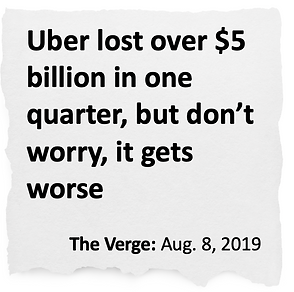
Gig work apps: Uber's record-setting valuations made it a global pathfinder, subject to unusual scrutiny. They have been found misleading work-seekers, withholding data and systematically undermining regulation. How much of each worker's earnings they retain remains largely unknown but it can go up to 50%. Successful platforms can slash workers' earnings to cut costs. See reports covering Shipt, Lyft, Uber, Doordash,Instacart, AmazonFlex or TaskRabbit
-
Employee Scheduling Systems: These platforms run monopsony labour markets for each corporate customer and drive irregular partial employment. Again, they are secretive so we can only speculate on what settings are input for any company. The best seller, Kronos WC8, has been marketed to corporates with the slogan "Manage your workforce without limits". The global market for employee scheduling systems is expected to keep growing by 10% a year until 2033.
-
Word of Mouth (off the books): Young men waiting in parking lots in the hope of ad hoc construction work is just a visible tip of the world of people cleaning, childminding, driving, laboring and serving for cash under the table. World Bank surveys show activity is dominated by sectors requiring irregular work.
-
Word of Mouth (legitimate): A tiny handful of lower-skilled workers are fortunate enough to have an employer who will let them decide their own hours, on payroll, at any time.
How many work irregularly?
Government doesn't know! That's been admitted by statistics agencies in, for example, the US, UK, and Canada. Official employment figures typically come from previous months' payroll or tax data. It is not granular enough to capture what's happening. An array of secondary sources can fill the gap.
Analysis claiming to size "gig work" often looks at just a slice of the irregular workforce, those filing self-employment tax returns with no other employees for example. Many reports ignore shadow economy activity, or undercount it because few people admit doing it. Some conflate home freelancing with lower-paid hours of work. But taking the holistic definition above, the best datapoints from multiple studies in comparable countries seems to be:
-
Overall numbers in any region: A figure of 36% of US adults now reliant on nonstandard employment was arrived at independently by both Gallup and McKinsey, in 2019.
-
Percentage of adults who can't take a job: Over 25% of US adults have a disability. An estimated 18 to 22% of US workers provide care for an older, sick, or disabled family member, impacting availability for work. These are the biggest groups of people who can't get into the traditional labor market.
-
Proportion of job-holders who look for top-up hours: Even in 2017, 41% of America's hourly paid workers didn't know next week's schedule. Some didn't know tomorrow's.
-
Adults who would rather work irregularly: The best polling on this worldwide seems to be a survey for government of 1,000 UK young labor market entrants. It found 68% prefer work from multiple sources as their way in.
-
Shadow economy activity: In 2016, the Federal Reserve estimated 27% of US adults earned from ad hoc, undeclared, work. World Bank analysis puts the total value at 10% the size of GDP in the US.
One key takeaway: All these indicators can reasonably be assumed to be rising. (AI and associated fears of labor market uncertainty is one driver.) It is hard to find credible data suggesting we are heading for an era of increasingly safe, stable, regular-hours, jobs for lower-paid workers.
Workforce Demographics
Already-marginalized groups are disproportionately reliant on nonjob employment. Improving quality of this work would influence economic outcomes across communities.
Data indicate the reliance among specific groups:
-
Communities of color: CLASP research established Black and Hispanic workers were much more prone to inadequate work hours. Center for Equitable Growth found the same.
-
Women: A 2017 survey had 35% of women relying on a side hustle, versus 28% of men.
-
The young: Gen Z increasingly turns to ad hoc employment. Many see income stacking as a safety net in an uncertain economy, although employers do fight back.
-
Lowest-income households: The pain points of families with children where parents rely on erratic work is captured in studies by, for example, the Shift center at Harvard.
Click on any image to open report